From Total Ban to Controlled Legalization
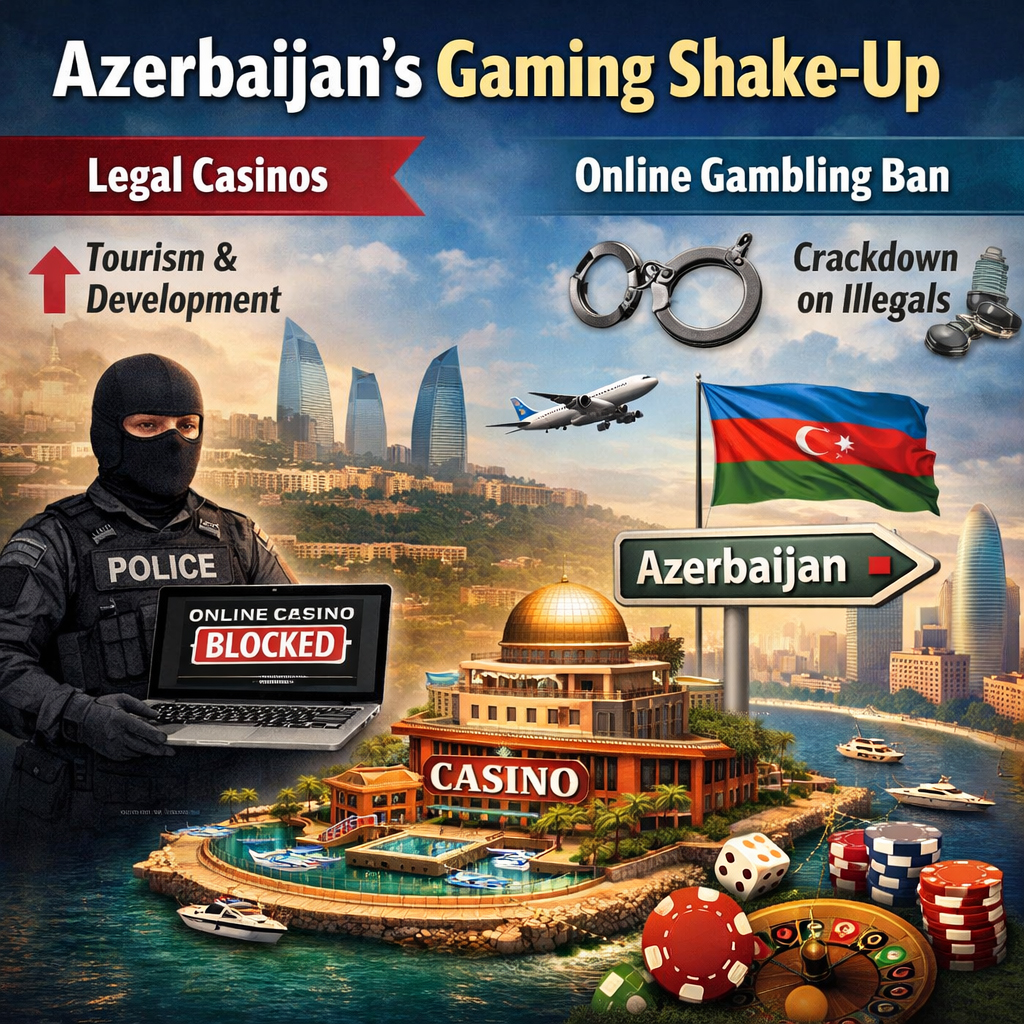
Since 1998, all forms of commercial casino gambling — both physical and digital — were banned in Azerbaijan under a strict legal regime. That changed in mid‑2025, when Parliament passed legislation allowing casino operations exclusively on artificial islands in the Azerbaijani sector of the Caspian Sea. Lawmakers and government officials have positioned this move as a way to boost tourism, create jobs, increase tax revenue, and curb the millions of dollars reportedly spent each year by Azerbaijani players in foreign casinos or unregulated online platforms.
Under the new law:
- Casinos must operate on designated artificial land plots in the Caspian Sea, not on the mainland.
- Only licensed legal entities can organize casino activities, subject to anti‑money laundering (AML) and counter‑terrorism financing (CTF) controls.
- Participation is restricted to adults 21 years and over, with strict oversight of financial operations.
- Online or virtual casinos remain banned — with the law specifically prohibiting gambling over the internet, mobile platforms, or social networks.
Strategic Tourism & Economic Ambitions
Azerbaijani authorities argue that regulated casino tourism could position the country as a premium entertainment destination in the region, attracting high‑spending visitors and diversifying an economy historically dominated by oil and gas. Analysts note that in 2025 alone the online gaming market — including betting, poker, and lotteries — is projected to generate more than $10 million and grow steadily at around 9.2 % annually through 2031, driven by increasing internet access and mobile usage.
However, experts differ on how far these initiatives can go. Some point to Georgia’s thriving casino tourism market — where gambling generates hundreds of millions in tourism revenue — as a model for regional competition. Others caution that Azerbaijan’s infrastructure and travel policies may limit its ability to attract similar visitor numbers without further reforms.
Enforcement vs. Online Gambling Reality
While the government opens a narrow window for legalized, land‑based casinos, its law enforcement arms are intensifying the fight against illegal online gambling. Recent police operations have led to the arrest of multiple cyber‑criminal groups accused of running illegal online casino networks and gambling pages on social media — highlighting that demand for online gaming persists despite the ban.
Authorities have also fined individuals for advertising unauthorized gambling services, signaling that regulatory enforcement will continue to be a priority even as the legal framework evolves.
Industry and Policy Outlook
Azerbaijan’s approach — blending strict online bans with targeted legalization of land‑based casinos — is unique in the region. It reflects both economic ambition and social sensitivity: lawmakers seek to capture gambling‑related revenue while managing moral and public health concerns widely associated with gaming expansion.
For online casinos and operators, the message is clear: while the domestic legal environment tightens against virtual gambling, foreign platforms may continue to attract Azerbaijani players through mobile and international offerings — especially as enforcement action makes headlines. At the same time, the nascent regulated casino sector presents a new avenue for investment, particularly in hospitality, entertainment, and tourism.